Leaning Retaining Wall Repair in Spokane Valley, WA — What to Expect
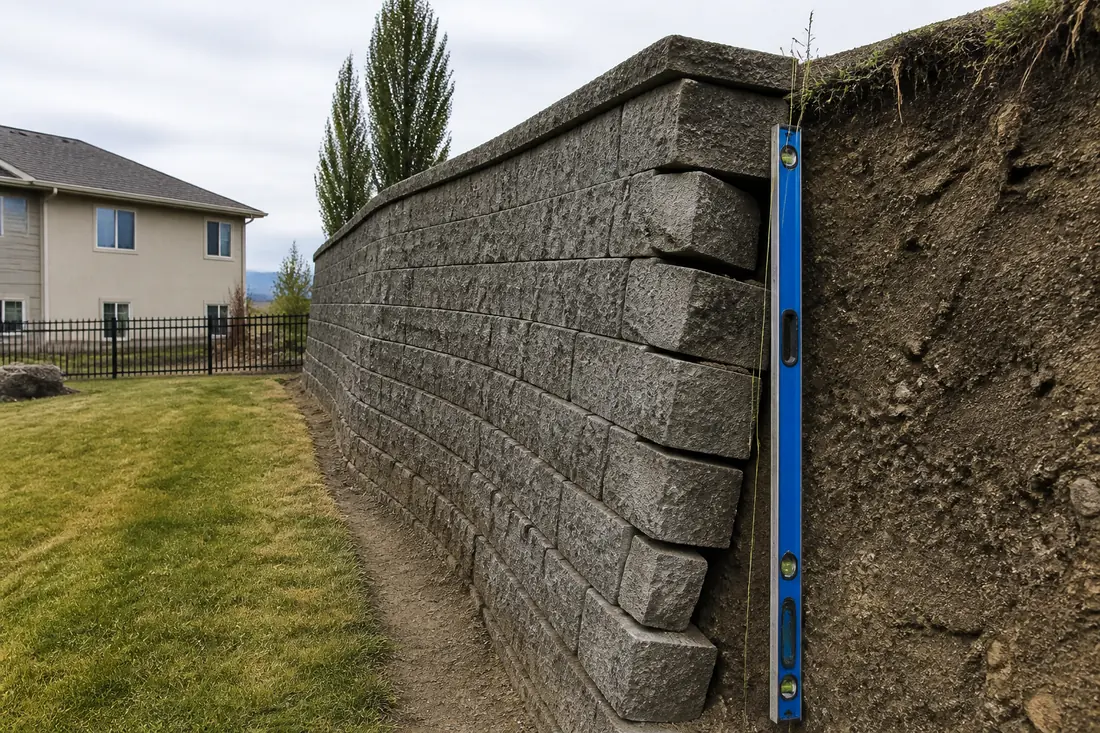
A wall that leans is losing an argument with the soil behind it. Where it leans tells you a good deal about which argument. Movement concentrated at the top usually points to reinforcement: the upper courses were never tied back into the slope, so they rotate forward while the base stays put. Movement through the middle more often points to water, with saturated backfill pushing against a wall that has no route to release it. A wall tipping as a whole unit, base included, suggests the problem is underneath rather than behind.
That distinction matters because it decides whether repair is realistic. Rotation at the top of a segmental wall can sometimes be addressed by taking the upper courses down, installing the geogrid that should have been there, and rebuilding. Movement driven by hydrostatic pressure can sometimes be arrested by retrofitting drainage before the wall is reset. A wall that has moved at the base has usually lost its bearing, and resetting the face without addressing the foundation puts the same wall back in the same position.
What is rarely true is that a leaning wall stops on its own. The mechanisms that started the movement — water with nowhere to go, insufficient reinforcement, a surcharge the wall was never designed for — do not resolve themselves, and the geometry gets worse as the wall rotates further out of plumb. The useful question is not whether it will keep moving but whether it is still cheap to fix.
What Is Included
- Movement pattern read before anything is priced — top, middle or base
- Drainage assessed as a cause rather than assumed
- Surcharge and uphill changes checked, including new roof discharge
- Repair, partial rebuild and full replacement compared honestly
- Reinforcement retrofitted where the original wall had none
- Written assessment you can put out to competitive bid
The Leaning Retaining Wall Repair Process
- 1
Step 1: Read the Movement
Where the wall has moved, how far, and whether it is rotating, bulging or sliding. A string line and level establish the pattern, and the pattern narrows the cause before anything is opened up.
- 2
Step 2: Find the Water
Downspout discharge, irrigation, altered grading uphill and the state of any existing drainage behind the wall. Water is the most common driver and the easiest to miss because the evidence sits behind the face.
- 3
Step 3: Check What Is Loading It
A driveway, parking area, structure or slope above the wall changes the forces on it entirely. Surcharge added after the wall was built is a frequent cause of movement in a wall that stood for years.
- 4
Step 4: Decide Repair or Rebuild
The options are compared on what each actually corrects. A repair that resets the face without addressing the cause returns the wall to the same condition, and that is stated plainly rather than sold.
Types of Leaning Retaining Wall Repair in Spokane Valley
Top-Course Rotation Repair
Upper courses taken down and rebuilt with the geogrid reinforcement the original wall lacked.
Drainage Retrofit and Reset
Drainage stone, filter fabric and collector pipe installed behind a wall that never had a working route out.
Base and Bearing Correction
Where movement starts at the bottom, correcting the base and bearing rather than resetting the face above it.
Full Rebuild of a Failed Wall
Where the wall has moved too far to reset, rebuilding with the drainage and reinforcement corrected.
What Matters When Choosing a Retaining Walls Contractor in Spokane Valley, WA
Drainage designed in, not added on
Poor drainage is one of the most common causes of retaining wall problems in this region. Drainage stone, filter fabric and outlets are part of the design, never an upsell.
We tell you when you need an engineer
Spokane Valley requires an engineered design for walls four feet or higher measured from the bottom of the footing — not from the exposed face — and underdrains on the same basis. Surcharged and tiered walls bring it on sooner. Worth establishing before a design is paid for rather than at plan review.
Built for freeze-thaw
Inland Northwest winters move soil hard. Base depth, compaction and backfill are specified for frost, not copied from a warm-climate detail.
Written scope before work starts
Wall height, block type, drainage detail, geogrid layout and backfill material, all in writing. You can put it out to competitive bid.
Slope and erosion work, not just walls
Sometimes the right answer is regrading, terracing or planting rather than a taller wall. We will tell you when that is cheaper.
Clean sites, real restoration
Excavation spoil hauled away, access routes protected, and the lawn put back. Wall work is heavy and messy — the cleanup is part of the job.
Leaning Retaining Wall Repair FAQs
Why is my retaining wall leaning?
Usually one of three things, and where it leans points to which. Rotation at the top commonly means the wall was never tied back into the slope with reinforcement. Bulging through the middle more often means water pressure behind a wall with no drainage route. Movement at the base suggests the foundation has lost bearing. A site visit reads the pattern rather than guessing from a photograph.
Can a leaning retaining wall be repaired?
Sometimes, and it depends on how far it has gone and what is driving it. Modest rotation on a segmental wall can often be corrected by taking courses down, adding reinforcement and rebuilding. A wall that has moved substantially, or one that has lost bearing at the base, is usually past the point where a repair is honest value.
Will a leaning wall stop moving on its own?
It is not something to count on. The conditions that started the movement do not resolve by themselves, and the geometry works against the wall as it rotates further. The practical question is whether it is still in the range where repair costs less than replacement.
How urgent is a leaning wall?
It depends on height, what it retains and what is below it. A low garden wall leaning slightly is a maintenance item. A tall wall retaining a driveway, or one above a path, walkway or neighboring property, is a different matter and worth assessing promptly.
Can the wall be pushed back into place?
Not as a repair method. Segmental walls are not designed to be jacked back, and forcing a wall upright without correcting drainage, reinforcement or bearing puts the same wall back into the same conditions. The courses come down and go back up properly, or the wall is replaced.
Other Services in Spokane Valley
- Poured Concrete Retaining WallsCast-in-place reinforced concrete for high walls, tight property lines and heavy surcharge loads.
- Retaining Wall DrainageDrainage design and retrofit — relieving the water pressure that builds up behind a wall.
- Terraced and Tiered Retaining WallsMultiple stepped walls that break a tall slope into usable levels — when spaced correctly.