Gabion Retaining Walls in Spokane Valley, WA — What to Expect
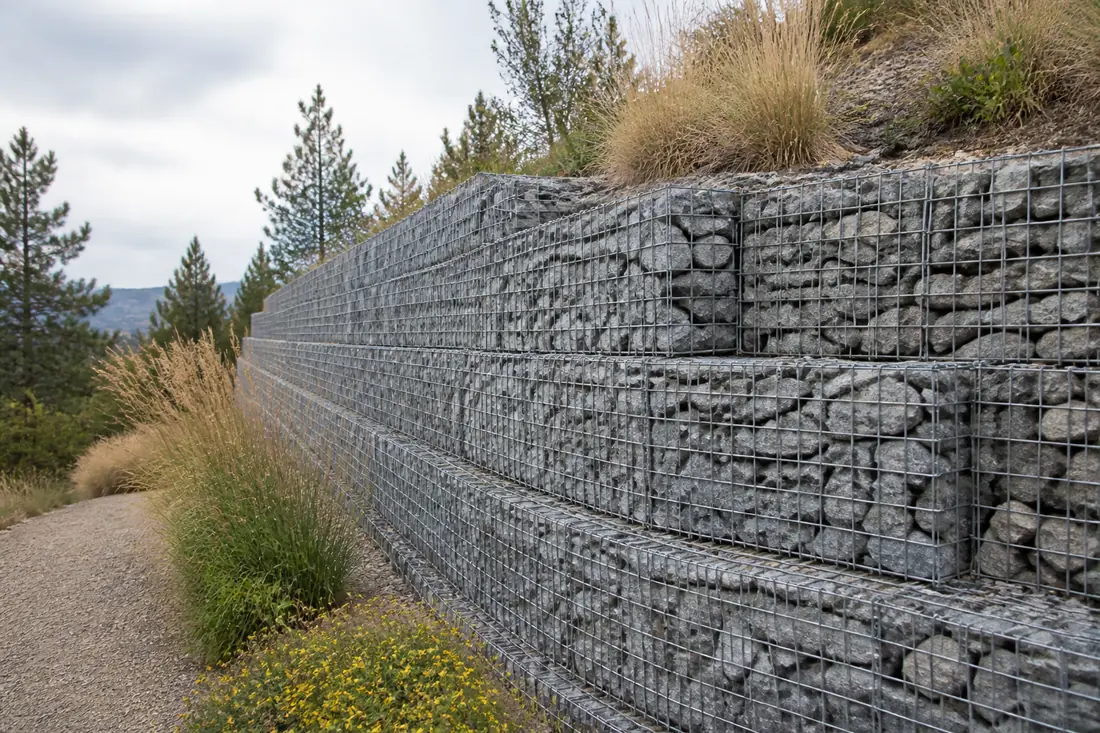
A gabion wall is built from galvanised or PVC-coated wire baskets filled with graded rock and tied together into a mass. It holds soil back by weight, in the same way a boulder wall does, but it achieves that weight from many small stones confined in a cage rather than from individual large ones. That difference is what gives gabions their particular usefulness.
The first advantage is drainage. A gabion is essentially a permeable structure: water passes through the rock fill and out the face rather than accumulating behind it. Hydrostatic pressure, which is one of the most common contributors to retaining wall problems, is largely designed out. That makes gabions worth considering on wet sites, at the toe of a slope, and along watercourses where a solid wall would need substantial drainage engineering to achieve the same result.
The second is tolerance of movement. Because the structure is flexible rather than rigid, a gabion can accommodate a degree of settlement or ground movement without cracking the way a poured wall would. The trade-offs are appearance, which is industrial and does not suit every setting, and the service life of the wire itself, which depends on the coating specified and the aggressiveness of the environment. The rock does not deteriorate; the baskets are what determine how long the wall lasts.
What Is Included
- Free-draining by construction rather than by added drainage
- Tolerant of settlement and ground movement without cracking
- Suited to wet sites, slope toes and watercourse edges
- Galvanised or PVC-coated basket specified to the environment
- Graded rock fill placed rather than tipped, for face quality
- Honest assessment of whether it suits the setting
The Gabion Retaining Walls Process
- 1
Step 1: Assess Site Suitability
Gabions suit wet ground, slope toes and watercourses, and suit some domestic settings poorly. Whether the appearance and the geometry work here is settled before anything is priced.
- 2
Step 2: Specify Basket and Coating
Galvanised or PVC-coated wire, gauge and mesh size chosen for the environment. The rock does not deteriorate, so the basket specification is what determines service life.
- 3
Step 3: Prepare Base and Set Baskets
A level, compacted base, with baskets set, laced to their neighbors and tensioned before filling so the finished face stays true.
- 4
Step 4: Fill and Face
Graded rock placed rather than tipped, with larger stone hand-set at the face for appearance and smaller fill behind. The difference between a tipped and a placed gabion is visible for the life of the wall.
Types of Gabion Retaining Walls in Spokane Valley
Gabion Retaining Walls
Wire basket walls holding soil back by mass, free-draining through the face.
Gabion Slope Toe Protection
Baskets at the foot of a slope where drainage and tolerance of movement matter more than appearance.
Watercourse and Erosion Gabions
Bank and channel protection where a permeable structure suits the setting better than a solid wall.
Gabion Seating and Feature Walls
Lower baskets used as landscape features, seating edges and planters where the industrial look is wanted.
What Matters When Choosing a Retaining Walls Contractor in Spokane Valley, WA
Drainage designed in, not added on
Poor drainage is one of the most common causes of retaining wall problems in this region. Drainage stone, filter fabric and outlets are part of the design, never an upsell.
We tell you when you need an engineer
Spokane Valley requires an engineered design for walls four feet or higher measured from the bottom of the footing — not from the exposed face — and underdrains on the same basis. Surcharged and tiered walls bring it on sooner. Worth establishing before a design is paid for rather than at plan review.
Built for freeze-thaw
Inland Northwest winters move soil hard. Base depth, compaction and backfill are specified for frost, not copied from a warm-climate detail.
Written scope before work starts
Wall height, block type, drainage detail, geogrid layout and backfill material, all in writing. You can put it out to competitive bid.
Slope and erosion work, not just walls
Sometimes the right answer is regrading, terracing or planting rather than a taller wall. We will tell you when that is cheaper.
Clean sites, real restoration
Excavation spoil hauled away, access routes protected, and the lawn put back. Wall work is heavy and messy — the cleanup is part of the job.
Gabion Retaining Walls FAQs
Do gabion walls need drainage behind them?
Far less than a solid wall, because the structure itself is permeable — water passes through the rock fill and out the face rather than building up behind it. That is one of the main reasons to choose a gabion on a wet site. Surface water arriving from above still needs managing, as it does with any wall.
How long does a gabion wall last?
The rock fill does not deteriorate, so service life is governed by the wire baskets and their coating, and by how aggressive the environment is. A galvanised basket and a PVC-coated basket have materially different expectations, which is why the coating is specified to the site rather than by default.
Are gabion walls suitable for a residential garden?
Sometimes, and it depends entirely on the setting and on taste. The appearance is industrial, and it reads well in a naturalistic or contemporary landscape and poorly against a traditional house. Where the site is wet or moving, the practical advantages can outweigh the aesthetic question.
How do gabions compare with boulder walls?
Both hold soil back by mass and both drain freely. A boulder wall uses individual large stones and reads as natural rock. A gabion achieves the same weight from smaller graded stone confined in baskets, which makes it more predictable in geometry and more tolerant of movement, at the cost of the visible wire.
Other Services in Spokane Valley
- Paver DrivewaysPermeable and standard paver driveways built to vehicle loading, on a considerably deeper base than a patio needs.
- Paver Patios and WalkwaysInterlocking paver patios and paths laid on a proper compacted base so they stay flat and keep draining.
- Drainage and GradingYard drainage, French drains and regrading that move water away from walls, patios and foundations.