Concrete Sealing in Spokane Valley, WA — What to Expect
Concrete is porous. Water gets in, freezes, expands by roughly nine percent, and pushes the surface apart from the inside. Do that a hundred times over a winter and the top layer begins to flake — the scaling visible on driveways all over the Inland Northwest.
De-icing salt makes it materially worse. It does not attack the concrete chemically so much as pull more water into the surface and increase the number of freeze-thaw cycles that surface goes through.
A sealer will not rescue concrete that is already failing. What it does is keep sound concrete sound, which is why the return on it is highest on a slab that is new or has just been repaired — and why it is most often skipped at exactly that point.
What Is Included
- Penetrating or film-forming sealer specified to the slab
- Surface cleaned and genuinely dry before application
- De-icing salt exposure accounted for
- Slip resistance considered on slopes and steps
- Told plainly when sealing will not help
The Concrete Sealing Process
- 1
Step 1: Assessment
The slab is checked for existing damage, previous sealers and how it drains. A failing slab needs repair before sealing, and a previously sealed one may need the old coating removed first.
- 2
Step 2: Cleaning
Oil, efflorescence and loose material are removed. A sealer applied over dirt seals the dirt in, and no amount of product quality compensates for that.
- 3
Step 3: Drying
Concrete has to be dry through, not just dry on top. Sealing over trapped moisture causes clouding and can lift the coating within weeks.
- 4
Step 4: Application
Applied at the specified spread rate in even coats. Over-application is the usual cause of a blotchy finish and does not improve protection.
- 5
Step 5: Curing
Left to cure before foot and vehicle traffic returns. How long depends on the product and the temperature, and cold slows it considerably.
Types of Concrete Sealing in Spokane Valley
Penetrating Sealers
Soak into the surface and work from within. They do not change the appearance and cannot peel, which is what suits them to driveways and textured finishes.
Film-Forming Sealers
Sit on the surface and can add sheen or deepen color. Well suited to decorative and stamped work, but they wear where traffic turns and need renewing.
Exposed Aggregate and Decorative Sealing
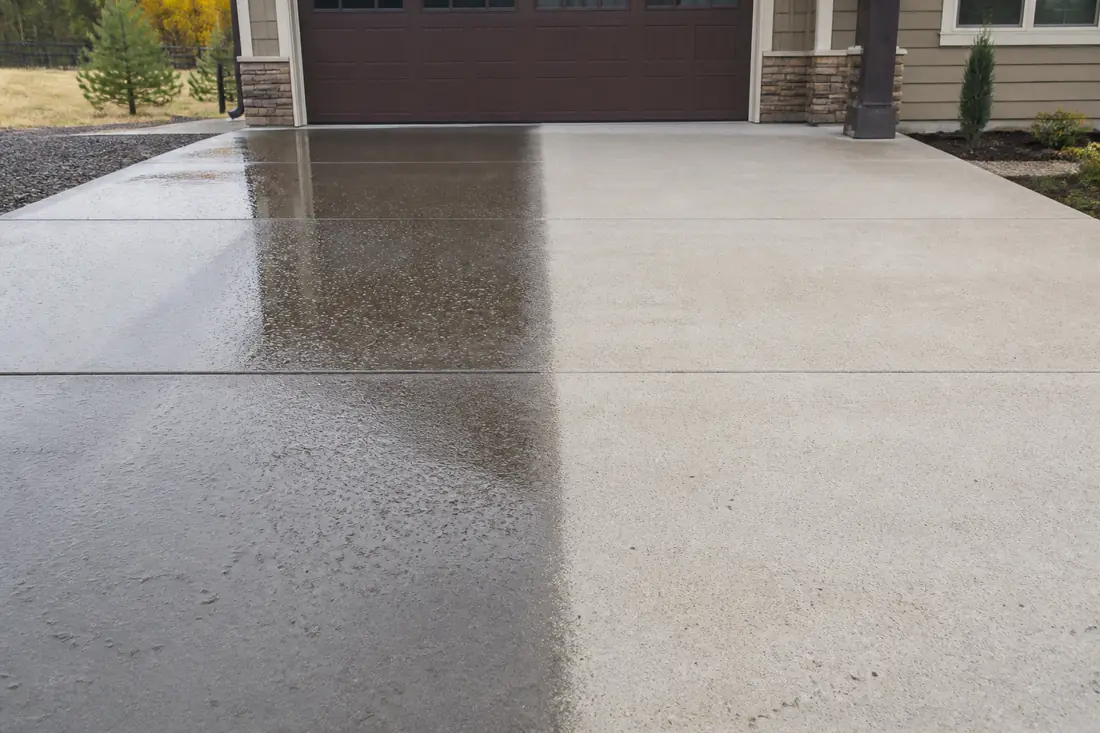
Keeps stone and color looking wet-bright rather than dull, on surfaces where appearance was part of what was paid for.
New Slab Sealing
Sealing once new concrete has cured. The cheapest point at which a slab will ever be protected, and the one most often missed.
What Matters When Choosing a Concrete Contractor in Spokane Valley, WA
Drainage designed in, not added on
Poor drainage is one of the most common causes of retaining wall problems in this region. Drainage stone, filter fabric and outlets are part of the design, never an upsell.
We tell you when you need an engineer
Spokane Valley requires an engineered design for walls four feet or higher measured from the bottom of the footing — not from the exposed face — and underdrains on the same basis. Surcharged and tiered walls bring it on sooner. Worth establishing before a design is paid for rather than at plan review.
Built for freeze-thaw
Inland Northwest winters move soil hard. Base depth, compaction and backfill are specified for frost, not copied from a warm-climate detail.
Written scope before work starts
Wall height, block type, drainage detail, geogrid layout and backfill material, all in writing. You can put it out to competitive bid.
Slope and erosion work, not just walls
Sometimes the right answer is regrading, terracing or planting rather than a taller wall. We will tell you when that is cheaper.
Clean sites, real restoration
Excavation spoil hauled away, access routes protected, and the lawn put back. Wall work is heavy and messy — the cleanup is part of the job.
Concrete Sealing FAQs
Does sealing a concrete driveway actually help?
On sound concrete, materially. Almost all surface failure here is freeze-thaw, and freeze-thaw needs water inside the slab. Keeping water out is the entire mechanism.
How often should a driveway be sealed?
It depends on the product and the traffic. Penetrating sealers last years. Film-forming ones wear first where tires turn and need renewing sooner.
Can new concrete be sealed straight away?
Not immediately — it has to cure first, and sealing too early traps moisture in the slab. Just after the initial cure is the ideal moment, and it is the cheapest protection that slab will ever get.
Will a sealer stop my concrete flaking?
It will not repair flaking that has already started. Scaling means the surface layer is already compromised, and sealing over it just seals a failing surface. Repair first, then seal.
Does sealing make concrete slippery?
Film-forming sealers can, particularly when wet. On slopes, steps and shaded areas that matters, so either a penetrating sealer or a grit additive is worth specifying up front.
Other Services in Spokane Valley
- Paver Patios and WalkwaysInterlocking paver patios and paths laid on a proper compacted base so they stay flat and keep draining.
- Concrete Levelling and Slab LiftingSettled slabs raised back to level by injection, for a fraction of the cost of breaking out and repouring.
- Concrete PatiosPoured concrete patios sized, drained and finished to stay flat and safe through Inland Northwest winters.