Concrete Levelling and Slab Lifting in Spokane Valley, WA — What to Expect
A slab that has sunk has almost never failed itself. What failed is the ground beneath it — fill that was never properly compacted, a void washed out by a downspout discharging in the wrong place, or soil that has been through enough freeze-thaw cycles to lose its structure. The concrete is usually still sound.
That matters, because lifting an intact slab costs a fraction of removing and repouring it, takes hours rather than days, and leaves no fresh concrete to cure through a Spokane winter.
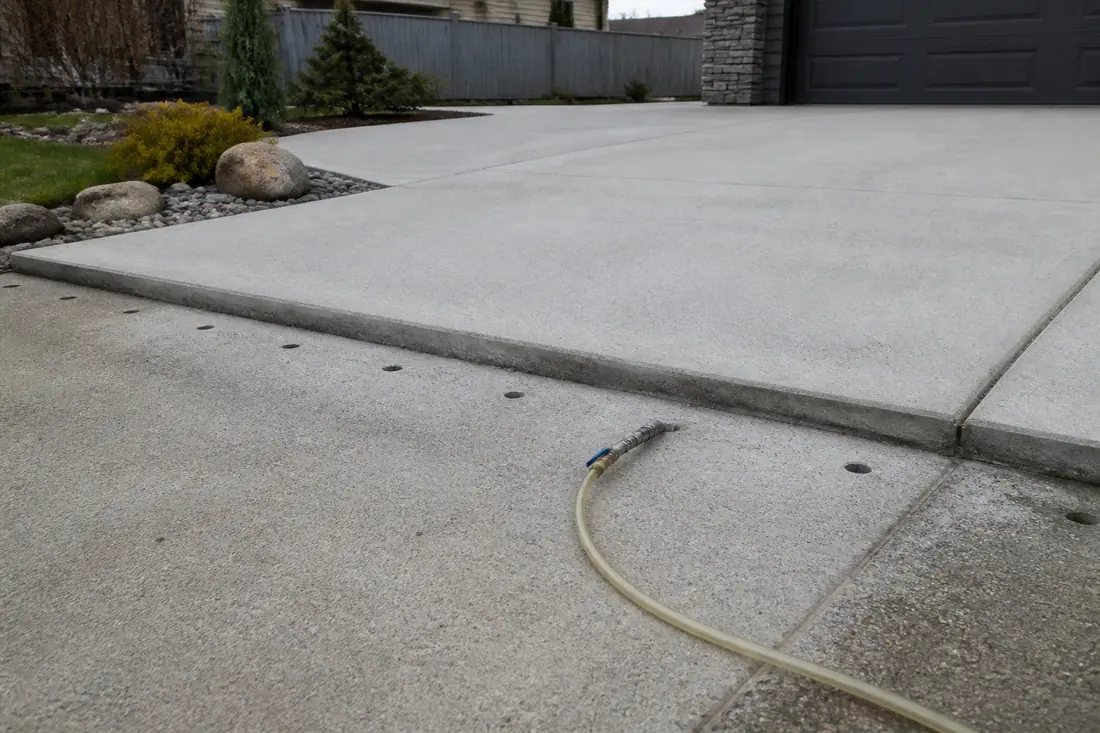
We inject beneath the slab through small ports, fill the void, and raise it in controlled stages until it sits back at the right level and fall. Where a slab is genuinely broken up rather than simply low, we will say so — lifting concrete that has cracked into six pieces gets you six pieces at the correct height.
What Is Included
- Cause of the settlement identified before lifting
- Polyurethane foam or cementitious slurry as the site requires
- Raised in controlled stages, not one lift
- Small injection ports, patched on completion
- Usually drivable the same day
- Lifting and replacement priced side by side
The Concrete Levelling and Slab Lifting Process
- 1
Step 1: Survey and Levels
Levels are taken across the slab to establish how far it has dropped and where. A slab that has tilted as one piece is a different job from one that has broken and settled unevenly.
- 2
Step 2: Finding Out Why
A downspout discharging beside the slab, an uncompacted service trench and general freeze-thaw settlement each leave a different pattern. Lifting without fixing the cause buys a repeat.
- 3
Step 3: Port Drilling
Small holes are drilled through the slab at spacings matched to its thickness and the size of the void beneath it.
- 4
Step 4: Injection and Lift
Material is injected to fill the void first and only then to lift. Raising happens in stages with levels checked continuously, because a slab lifted too fast in one spot cracks.
- 5
Step 5: Patching and Drainage Check
Ports are filled flush and the finished levels checked so water runs away from the slab rather than back underneath it.
Types of Concrete Levelling and Slab Lifting in Spokane Valley
Polyurethane Foam Injection
Expanding structural foam injected through small ports. Light, sets in minutes and is drivable almost immediately, which is what makes it the usual choice on driveways.
Cementitious Slurry (Mudjacking)
A cement and aggregate slurry pumped beneath the slab. Heavier and slower to cure than foam, but well suited to large slabs and deep voids where the added weight does not matter.
Void Filling Without Lifting
Filling a void beneath a slab that is still at the correct level, so it does not drop later. Considerably cheaper than waiting for it to sink first.
Trip Hazard and Joint Levelling
Raising one side of a joint where a path or sidewalk has stepped. Both a trip hazard and, on a commercial frontage, a liability worth removing.
What Matters When Choosing a Concrete Contractor in Spokane Valley, WA
Drainage designed in, not added on
Poor drainage is one of the most common causes of retaining wall problems in this region. Drainage stone, filter fabric and outlets are part of the design, never an upsell.
We tell you when you need an engineer
Spokane Valley requires an engineered design for walls four feet or higher measured from the bottom of the footing — not from the exposed face — and underdrains on the same basis. Surcharged and tiered walls bring it on sooner. Worth establishing before a design is paid for rather than at plan review.
Built for freeze-thaw
Inland Northwest winters move soil hard. Base depth, compaction and backfill are specified for frost, not copied from a warm-climate detail.
Written scope before work starts
Wall height, block type, drainage detail, geogrid layout and backfill material, all in writing. You can put it out to competitive bid.
Slope and erosion work, not just walls
Sometimes the right answer is regrading, terracing or planting rather than a taller wall. We will tell you when that is cheaper.
Clean sites, real restoration
Excavation spoil hauled away, access routes protected, and the lawn put back. Wall work is heavy and messy — the cleanup is part of the job.
Concrete Levelling and Slab Lifting FAQs
Can a sunken driveway be lifted instead of replaced?
Usually, provided the slab itself is intact. What is normally wrong is the ground under it rather than the concrete, and injecting beneath restores the level for a fraction of replacement cost.
How long does slab lifting take?
Most residential driveways are a few hours. With polyurethane foam the slab is typically drivable the same day, which is the main practical advantage over removing and repouring.
What is the difference between mudjacking and foam?
Mudjacking pumps a cement slurry, which is heavier and takes longer to cure. Polyurethane foam is far lighter, expands to fill the void and sets in minutes. Foam usually suits driveways; slurry can suit large slabs where the extra weight is not a concern.
Will it just sink again?
Not if the reason it sank is dealt with. If a downspout still discharges beside the slab, or a service trench was never compacted, the ground will keep moving whatever is injected under it.
Why does concrete settle so much around Spokane?
Freeze-thaw is the main driver. Water in the soil beneath a slab freezes and expands, then thaws and leaves the ground looser than it was. Repeat that every winter and poorly compacted fill gradually loses its structure.
Other Services in Spokane Valley
- Poured Concrete Retaining WallsCast-in-place reinforced concrete for high walls, tight property lines and heavy surcharge loads.
- Retaining Wall DrainageDrainage design and retrofit — relieving the water pressure that builds up behind a wall.
- Retaining Wall InstallationNew retaining walls built to the right height, base depth and drainage detail for your slope and soil.